
Framework
The Five Paths to
Business Ownership
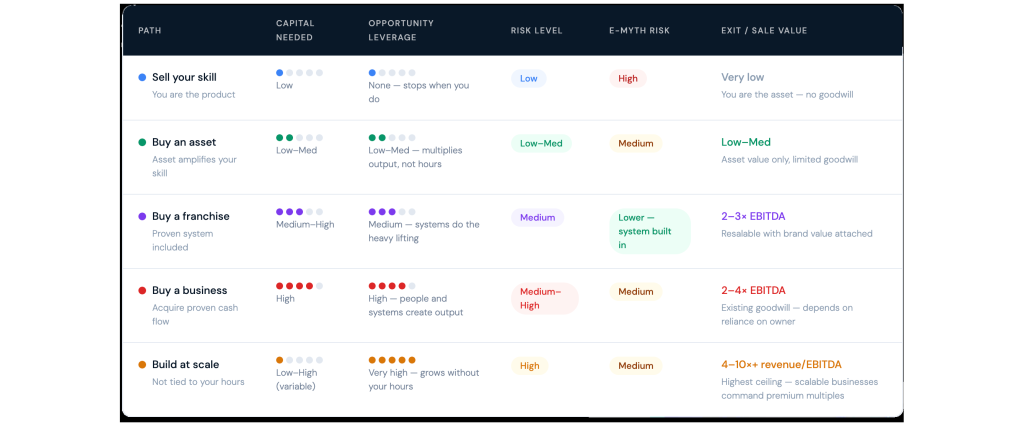
Not all businesses are the same — and not all paths to ownership are either. Understanding which path you're on changes everything about the decisions you make.
Each path has a different risk profile, capital requirement, and exit potential.
Use this matrix to understand where you are and where you're headed.
What is E-Myth risk?
The business skills gap between being great at what you do and knowing how to run a business around it.
The E-Myth — short for the Entrepreneurial Myth — describes the trap most business owners fall into. They started their business because they were good at a craft or skill — a mechanic, a chef, a designer, a consultant. But being great at the technical work and being great at running a business are two completely different things.
The missing skills are the entrepreneurial and managerial ones: understanding your numbers, leading people, building systems, managing cash flow, marketing and selling, planning for growth. Without these, even technically brilliant businesses struggle and fail.
The higher the E-Myth risk on a given path, the more these business skills matter — and the harder the gap is to close without support.
Concept credited to Michael E. Gerber, The E-Myth Revisited: Why Most Small Businesses Don't Work and What to Do About It (1995).
Where are you right now? Select your current stage to see where you sit on the pathway.
Path 1 — Starting point
Sell your skill
Monetise your expertise directly. A bookkeeper, consultant, specialist, or coach. Income is immediate and low-risk — but it stops when you do. Most people begin here. It builds confidence, cash flow, and market knowledge.
Skills to develop at this stage
Pricing your value · Finding clients · Delivering reliably · Managing cash flow
Cash in your pocket — the fuel for everything that follows
Path 2 — First leverage
Buy an asset, put it to work
Use surplus cash from your skill to buy assets that amplify what you do. A mechanic buys a hoist to do more jobs. An IT consultant buys laptops to hire out. A marketing consultant buys AI software to onsell. An Uber driver buys the car rather than using someone else's. Your skill is still central — the asset multiplies your output.
Skills to develop at this stage
Asset selection · Financing basics · Managing yield · Tax structuring
More output from the same skill base — your first step beyond trading hours
Path 3 or 4 — Significant leverage
Buy a business or franchise
With capital and experience built from earlier paths, you acquire an operation with existing customers, revenue, and staff — or a franchise with a proven playbook. You are no longer the one doing all the work. People and systems create the output.
Skills to develop at this stage
Deal evaluation · Due diligence · Team leadership · Systems and KPIs
2–3x EBITDA exit value — a real sellable asset on your balance sheet
Path 5 — Maximum leverage
Build a scalable business
You have spent years learning how businesses and customers work. Now you build something not tied to your hours — starting from scratch, fixing a real problem, and going big. A product, a brand, a scalable service model. Revenue scales independently of the founder. Exit multiples are the highest of any path.
Skills to develop at this stage
Product-market fit · Team building · Marketing systems · Investor readiness
4-10x exit multiple — the highest wealth-creation ceiling of any path
Reinvest and repeat
Proceeds become new investments
Exit proceeds from any path feed back in — more assets, more acquisitions, more building. Over time, a diversified portfolio of businesses, assets, and investments becomes your income engine.
Skills to develop at this stage
Portfolio thinking · Wealth structuring · Investment vehicles · Legacy planning
Financial independence — income that no longer needs you
You can join this pathway at any stage. There are no prerequisites — only skills to build at each level.
Startup Sherpa works with business owners across all five paths, from sole traders just starting out to founders building for exit.
Path 1 — Starting point
Sell your skill
Monetise your expertise directly. A bookkeeper, consultant, specialist, or coach. Income is immediate and low-risk — but it stops when you do. Most people begin here. It builds confidence, cash flow, and market knowledge.
Skills to develop at this stage
Pricing your value · Finding clients · Delivering reliably · Managing cash flow
Cash in your pocket — the fuel for everything that follows
Path 2 — First leverage
Buy an asset, put it to work
Use surplus cash from your skill to buy assets that amplify what you do. A mechanic buys a hoist to do more jobs. An IT consultant buys laptops to hire out. A marketing consultant buys AI software to onsell. An Uber driver buys the car rather than using someone else's. Your skill is still central — the asset multiplies your output.
Skills to develop at this stage
Asset selection · Financing basics · Managing yield · Tax structuring
More output from the same skill base — your first step beyond trading hours
Path 3 or 4 — Significant leverage
Buy a business or franchise
With capital and experience built from earlier paths, you acquire an operation with existing customers, revenue, and staff — or a franchise with a proven playbook. You are no longer the one doing all the work. People and systems create the output.
Skills to develop at this stage
Deal evaluation · Due diligence · Team leadership · Systems and KPIs
2–3x EBITDA exit value — a real sellable asset on your balance sheet
Path 5 — Maximum leverage
Build a scalable business
You have spent years learning how businesses and customers work. Now you build something not tied to your hours — starting from scratch, fixing a real problem, and going big. A product, a brand, a scalable service model. Revenue scales independently of the founder. Exit multiples are the highest of any path.
Skills to develop at this stage
Product-market fit · Team building · Marketing systems · Investor readiness
4-10x exit multiple — the highest wealth-creation ceiling of any path
Reinvest and repeat
Proceeds become new investments
Exit proceeds from any path feed back in — more assets, more acquisitions, more building. Over time, a diversified portfolio of businesses, assets, and investments becomes your income engine.
Skills to develop at this stage
Portfolio thinking · Wealth structuring · Investment vehicles · Legacy planning
Financial independence — income that no longer needs you
You can join this pathway at any stage.There are no prerequisites — only skills to build at each level.
Startup Sherpa works with business owners across all five paths, from sole traders just starting out to founders building for exit.
Path 1 — Starting point
Sell your skill
Monetise your expertise directly. A bookkeeper, consultant, specialist, or coach. Income is immediate and low-risk — but it stops when you do. Most people begin here. It builds confidence, cash flow, and market knowledge.
Skills to develop at this stage
Pricing your value · Finding clients · Delivering reliably · Managing cash flow
Cash in your pocket — the fuel for everything that follows
Path 2 — First leverage
Buy an asset, put it to work
Use surplus cash from your skill to buy assets that amplify what you do. A mechanic buys a hoist to do more jobs. An IT consultant buys laptops to hire out. A marketing consultant buys AI software to onsell. An Uber driver buys the car rather than using someone else's. Your skill is still central — the asset multiplies your output.
Skills to develop at this stage
Asset selection · Financing basics · Managing yield · Tax structuring
More output from the same skill base — your first step beyond trading hours
Path 3 or 4 — Significant leverage
Buy a business or franchise
With capital and experience built from earlier paths, you acquire an operation with existing customers, revenue, and staff — or a franchise with a proven playbook. You are no longer the one doing all the work. People and systems create the output.
Skills to develop at this stage
Deal evaluation · Due diligence · Team leadership · Systems and KPIs
2–3x EBITDA exit value — a real sellable asset on your balance sheet
Path 5 — Maximum leverage
Build a scalable business
You have spent years learning how businesses and customers work. Now you build something not tied to your hours — starting from scratch, fixing a real problem, and going big. A product, a brand, a scalable service model. Revenue scales independently of the founder. Exit multiples are the highest of any path.
Skills to develop at this stage
Product-market fit · Team building · Marketing systems · Investor readiness
4-10x exit multiple — the highest wealth-creation ceiling of any path
Reinvest and repeat
Proceeds become new investments
Exit proceeds from any path feed back in — more assets, more acquisitions, more building. Over time, a diversified portfolio of businesses, assets, and investments becomes your income engine.
Skills to develop at this stage
Portfolio thinking · Wealth structuring · Investment vehicles · Legacy planning
Financial independence — income that no longer needs you
You can join this pathway at any stage.There are no prerequisites — only skills to build at each level.
Startup Sherpa works with business owners across all five paths, from sole traders just starting out to founders building for exit.
Path 1 — Starting point
Sell your skill
Monetise your expertise directly. A bookkeeper, consultant, specialist, or coach. Income is immediate and low-risk — but it stops when you do. Most people begin here. It builds confidence, cash flow, and market knowledge.
Skills to develop at this stage
Pricing your value · Finding clients · Delivering reliably · Managing cash flow
Cash in your pocket — the fuel for everything that follows
Path 2 — First leverage
Buy an asset, put it to work
Use surplus cash from your skill to buy assets that amplify what you do. A mechanic buys a hoist to do more jobs. An IT consultant buys laptops to hire out. A marketing consultant buys AI software to onsell. An Uber driver buys the car rather than using someone else's. Your skill is still central — the asset multiplies your output.
Skills to develop at this stage
Asset selection · Financing basics · Managing yield · Tax structuring
More output from the same skill base — your first step beyond trading hours
Path 3 or 4 — Significant leverage
Buy a business or franchise
With capital and experience built from earlier paths, you acquire an operation with existing customers, revenue, and staff — or a franchise with a proven playbook. You are no longer the one doing all the work. People and systems create the output.
Skills to develop at this stage
Deal evaluation · Due diligence · Team leadership · Systems and KPIs
2–3x EBITDA exit value — a real sellable asset on your balance sheet
Path 5 — Maximum leverage
Build a scalable business
You have spent years learning how businesses and customers work. Now you build something not tied to your hours — starting from scratch, fixing a real problem, and going big. A product, a brand, a scalable service model. Revenue scales independently of the founder. Exit multiples are the highest of any path.
Skills to develop at this stage
Product-market fit · Team building · Marketing systems · Investor readiness
4-10x exit multiple — the highest wealth-creation ceiling of any path
Reinvest and repeat
Proceeds become new investments
Exit proceeds from any path feed back in — more assets, more acquisitions, more building. Over time, a diversified portfolio of businesses, assets, and investments becomes your income engine.
Skills to develop at this stage
Portfolio thinking · Wealth structuring · Investment vehicles · Legacy planning
Financial independence — income that no longer needs you
You can join this pathway at any stage.There are no prerequisites — only skills to build at each level.
Startup Sherpa works with business owners across all five paths, from sole traders just starting out to founders building for exit.
Path 1 — Starting point
Sell your skill
Monetise your expertise directly. A bookkeeper, consultant, specialist, or coach. Income is immediate and low-risk — but it stops when you do. Most people begin here. It builds confidence, cash flow, and market knowledge.
Skills to develop at this stage
Pricing your value · Finding clients · Delivering reliably · Managing cash flow
Cash in your pocket — the fuel for everything that follows
Path 2 — First leverage
Buy an asset, put it to work
Use surplus cash from your skill to buy assets that amplify what you do. A mechanic buys a hoist to do more jobs. An IT consultant buys laptops to hire out. A marketing consultant buys AI software to onsell. An Uber driver buys the car rather than using someone else's. Your skill is still central — the asset multiplies your output.
Skills to develop at this stage
Asset selection · Financing basics · Managing yield · Tax structuring
More output from the same skill base — your first step beyond trading hours
Path 3 or 4 — Significant leverage
Buy a business or franchise
With capital and experience built from earlier paths, you acquire an operation with existing customers, revenue, and staff — or a franchise with a proven playbook. You are no longer the one doing all the work. People and systems create the output.
Skills to develop at this stage
Deal evaluation · Due diligence · Team leadership · Systems and KPIs
2–3x EBITDA exit value — a real sellable asset on your balance sheet
Path 5 — Maximum leverage
Build a scalable business
You have spent years learning how businesses and customers work. Now you build something not tied to your hours — starting from scratch, fixing a real problem, and going big. A product, a brand, a scalable service model. Revenue scales independently of the founder. Exit multiples are the highest of any path.
Skills to develop at this stage
Product-market fit · Team building · Marketing systems · Investor readiness
4-10x exit multiple — the highest wealth-creation ceiling of any path
Reinvest and repeat
Proceeds become new investments
Exit proceeds from any path feed back in — more assets, more acquisitions, more building. Over time, a diversified portfolio of businesses, assets, and investments becomes your income engine.
Skills to develop at this stage
Portfolio thinking · Wealth structuring · Investment vehicles · Legacy planning
Financial independence — income that no longer needs you
You can join this pathway at any stage.There are no prerequisites — only skills to build at each level.
Startup Sherpa works with business owners across all five paths, from sole traders just starting out to founders building for exit.
Path 1 — Starting point
Sell your skill
Monetise your expertise directly. A bookkeeper, consultant, specialist, or coach. Income is immediate and low-risk — but it stops when you do. Most people begin here. It builds confidence, cash flow, and market knowledge.
Skills to develop at this stage
Pricing your value · Finding clients · Delivering reliably · Managing cash flow
Cash in your pocket — the fuel for everything that follows
Path 2 — First leverage
Buy an asset, put it to work
Use surplus cash from your skill to buy assets that amplify what you do. A mechanic buys a hoist to do more jobs. An IT consultant buys laptops to hire out. A marketing consultant buys AI software to onsell. An Uber driver buys the car rather than using someone else's. Your skill is still central — the asset multiplies your output.
Skills to develop at this stage
Asset selection · Financing basics · Managing yield · Tax structuring
More output from the same skill base — your first step beyond trading hours
Path 3 or 4 — Significant leverage
Buy a business or franchise
With capital and experience built from earlier paths, you acquire an operation with existing customers, revenue, and staff — or a franchise with a proven playbook. You are no longer the one doing all the work. People and systems create the output.
Skills to develop at this stage
Deal evaluation · Due diligence · Team leadership · Systems and KPIs
2–3x EBITDA exit value — a real sellable asset on your balance sheet
Path 5 — Maximum leverage
Build a scalable business
You have spent years learning how businesses and customers work. Now you build something not tied to your hours — starting from scratch, fixing a real problem, and going big. A product, a brand, a scalable service model. Revenue scales independently of the founder. Exit multiples are the highest of any path.
Skills to develop at this stage
Product-market fit · Team building · Marketing systems · Investor readiness
4-10x exit multiple — the highest wealth-creation ceiling of any path
Reinvest and repeat
Proceeds become new investments
Exit proceeds from any path feed back in — more assets, more acquisitions, more building. Over time, a diversified portfolio of businesses, assets, and investments becomes your income engine.
Skills to develop at this stage
Portfolio thinking · Wealth structuring · Investment vehicles · Legacy planning
Financial independence — income that no longer needs you
You can join this pathway at any stage.There are no prerequisites — only skills to build at each level.
Startup Sherpa works with business owners across all five paths, from sole traders just starting out to founders building for exit.
Not sure which path you're on?
Take the three-minute quiz and we'll tell you exactly where you are and what your next step looks like.
From startup to your first $1 Million.
Startup Sherpa is a trading name of
Kalek Advisors Pty Ltd
ABN: 58 693 152 251
Tax Agent No: 26338091 · ASIC Agent No: 54256
PO Box 135, Darlington WA 6070
Services
Contact
Stay connected
Practical business insights, financial guidance, and resources for founders building sustainable businesses.
© 2025 Kalek Advisors Pty Ltd trading as Startup Sherpa. All rights reserved.
Liability limited by a scheme approved under Professional Standards Legislation.
The information on this website is general in nature and does not constitute financial, tax, or legal advice. Please seek professional advice tailored to your specific circumstances.